Our purpose

We believe the technologies shaping the next century should be taught on the block, not just in the boardroom.

The Capital Foundation for Energy and AI is a Maryland nonprofit corporation organized exclusively for charitable, educational, and scientific purposes within the meaning of Section 501(c)(3) of the Internal Revenue Code. Our mission is to improve community resilience through education, workforce development, and hands-on learning opportunities related to renewable and sustainable energy, food systems, environmental stewardship, and emerging technologies — with a particular focus on underserved urban and rural communities.

Why we do this

Resilience is learned before it is needed

Energy systems, food systems, and artificial intelligence are being rebuilt at the same time. The communities with the least margin for error are usually the last to be included in that conversation — and the first to feel a blackout, a food gap, or a job market that moved without them.

We exist to close that gap with education. When a student can monitor a growing system, read its data, and explain why it works, resilience stops being a policy word and becomes a skill they own. When a congregation understands solar and battery storage, it can plan for the next storm. When a nonprofit can use AI responsibly, its small staff can serve more neighbors.

Our four programs are designed as a deliberate three-phase rollout, each phase building on the community relationships, credibility, and institutional capacity established in the prior phase. This staged approach ensures programming is delivered with quality and impact proportionate to our resources at each stage of growth.

What we expect to change

  • Increase STEM participation
  • Improve workforce readiness
  • Promote healthy food access
  • Encourage environmental stewardship
  • Strengthen community resilience

Any revenue generated through educational activities is used exclusively to further the Foundation's exempt charitable purposes.

Phase 1 · 2026 · Current program

Community Energy and Resilience Initiative

Our flagship charitable program, launched in our inaugural period (June–December 2026). We work with schools, nonprofit organizations, community centers, local governments, and educational institutions to develop programs that provide practical learning experiences while addressing community needs.

Activities include classroom instruction, workshops, demonstrations, pilot projects, educational exhibits, and community outreach covering renewable and sustainable energy technologies, sustainable agriculture, energy resilience, and artificial intelligence. Educational resources are made available to students, educators, nonprofits, and community members, with priority given to underserved urban and rural communities.

Example program

Indoor Agricultural Learning Laboratories

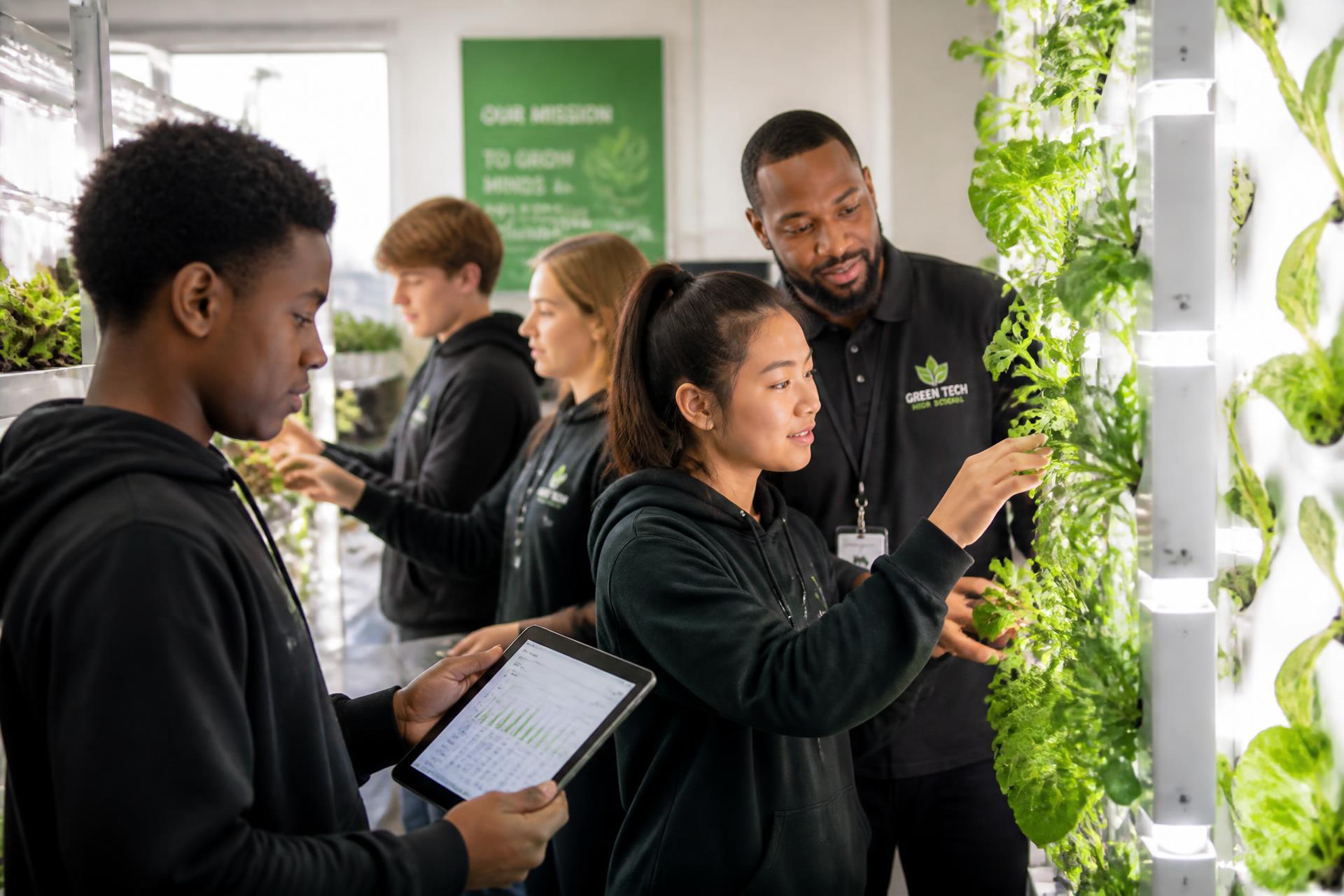
School- and community-based indoor agricultural learning laboratories using automated hydroponic growing systems. Students participate in every stage: system design, crop production, environmental monitoring, data analysis, harvesting, packaging, and distribution — alongside business planning, financial literacy, and workforce development.

Where appropriate, produce grown through these programs may be donated to local food banks, schools, senior centers, or community organizations, or sold through educational fundraising activities that support future programming.

Sustainable agricultureRenewable energy conceptsWater conservationAutomation and AIData collection and analysisEntrepreneurshipNutritionSTEM education
Students tending leafy greens in a vertical hydroponic system
Phase 2 · 2027 · Planned

Microgrid education and AI literacy for community organizations

Upon securing Year 2 funding, we plan to launch two complementary programs that build directly on the relationships established in Year 1.

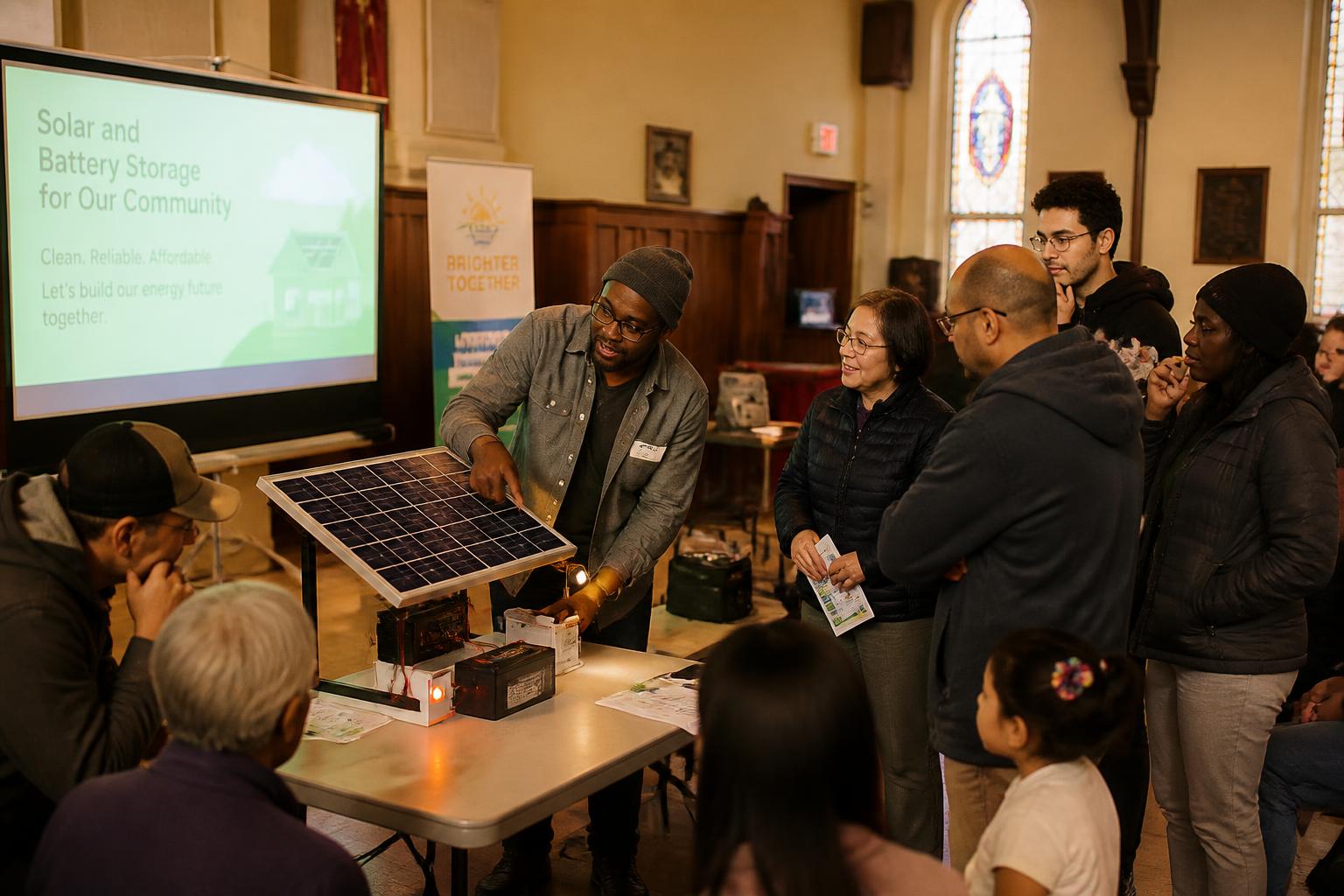
Facilitator demonstrating a solar and battery storage unit at a community workshop

Community Microgrid and Energy Resilience Education

Workshops, demonstrations, and educational materials that help residents, nonprofits, schools, and local leaders understand how distributed energy resources improve resilience during natural disasters, severe weather, and power outages. Topics include solar energy, battery storage, microgrids, energy efficiency, and emergency planning.

We collaborate with churches, mosques, synagogues, and other faith-based organizations that serve as trusted gathering places, expanding access to programming and reaching underserved populations. Our role is educational: to increase public knowledge and encourage informed decision-making.
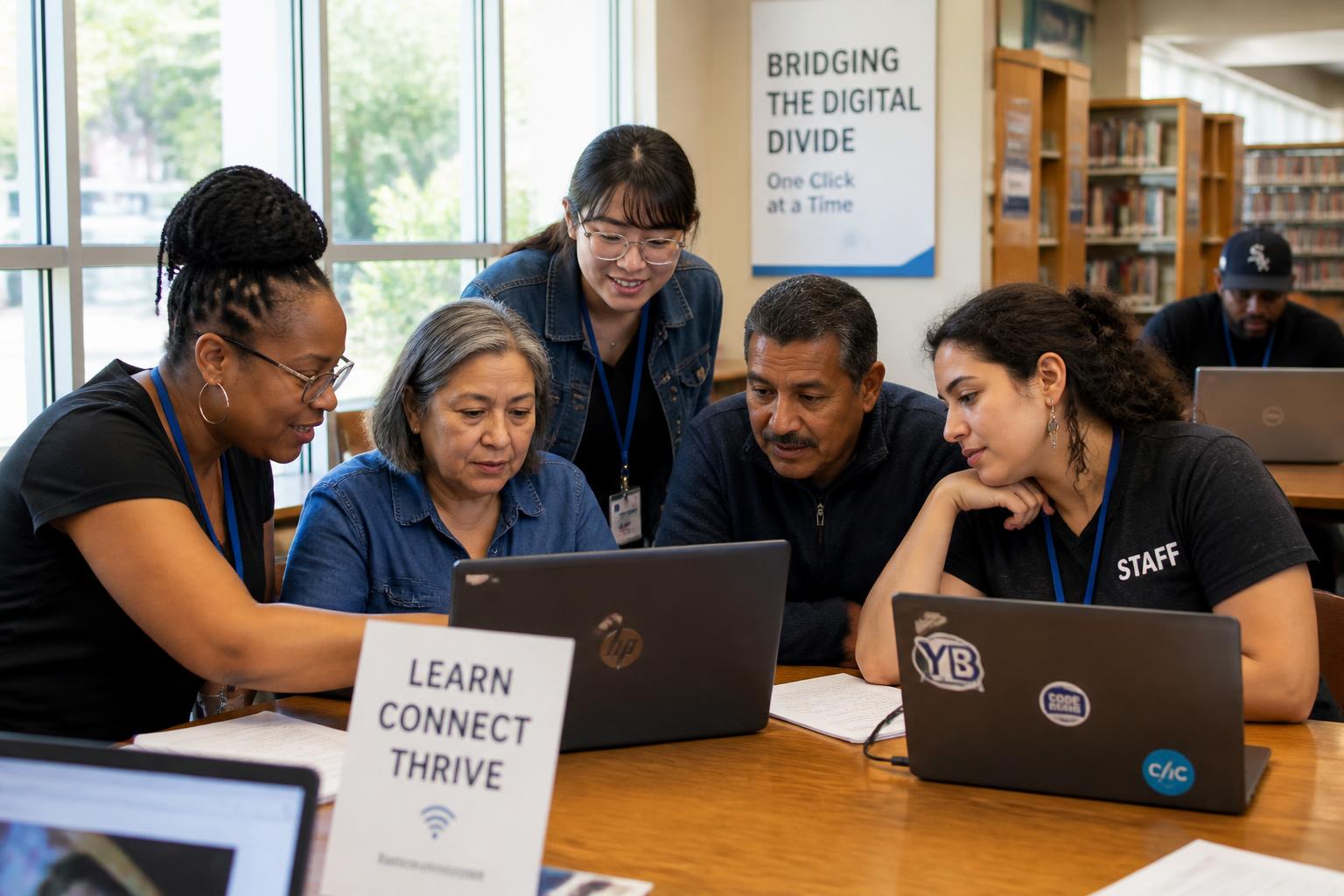
Nonprofit staff and volunteers learning digital tools around laptops

AI and Digital Literacy for Community Organizations

Many community organizations lack the resources and technical expertise to evaluate and implement AI tools. We provide charitable education covering practical AI applications, digital literacy, cybersecurity awareness, responsible data practices, and emerging technologies.

Workshops, seminars, online resources, and hands-on training cover AI-assisted administration, grant writing, community outreach, volunteer coordination, data management, and responsible use of generative AI. We do not provide commercial technology consulting or promote specific vendors.

Phase 3 · 2028 · Planned

Artificial Intelligence Workforce Development Initiative

As demand grows for skilled workers to support AI-enabled infrastructure — data centers, advanced manufacturing, renewable energy projects, and resilient community infrastructure — we will collaborate with educational institutions, nonprofits, workforce agencies, labor organizations, and industry partners to expand career opportunities for underserved populations.

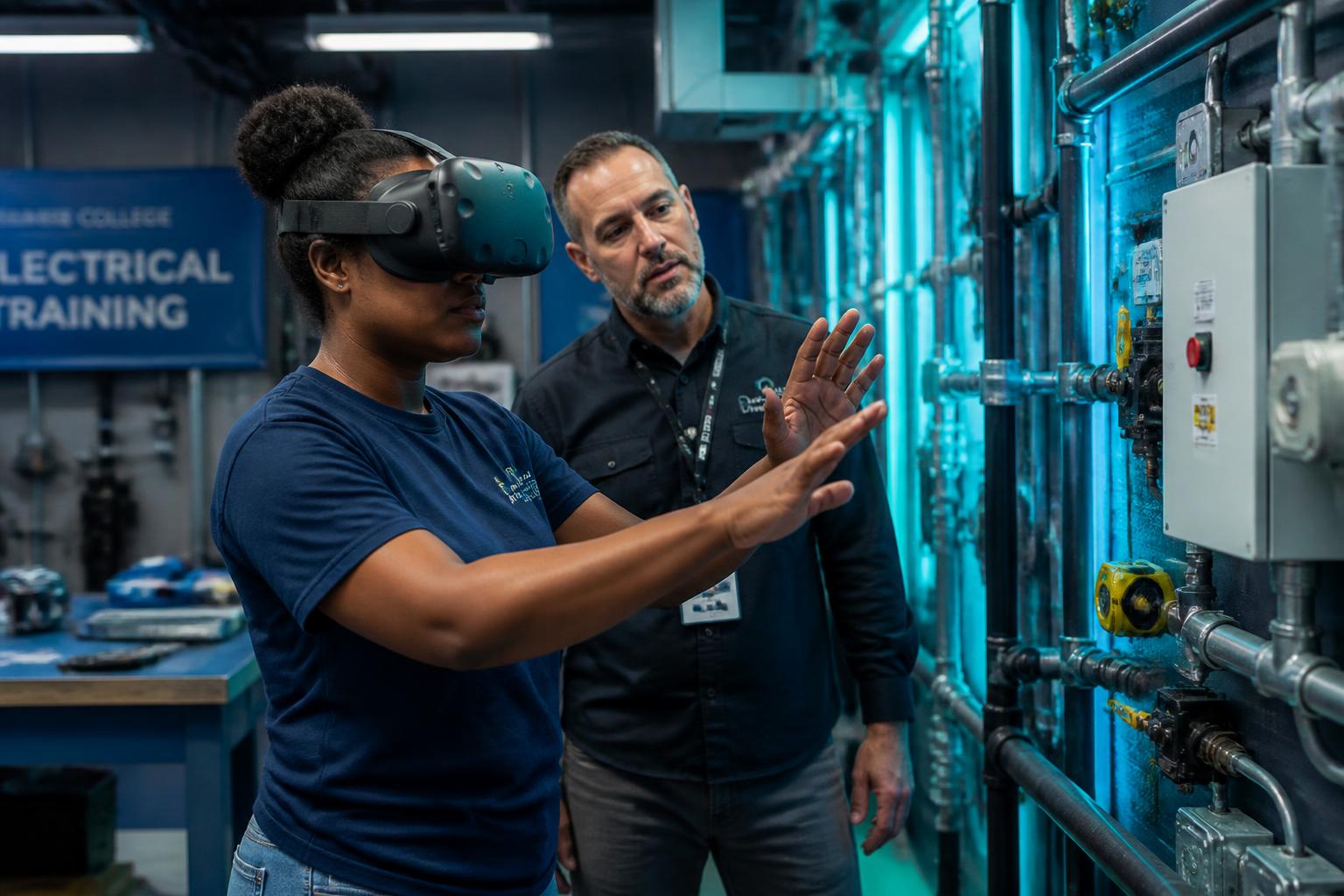
Augmented reality, virtual reality, AI-assisted learning platforms, and interactive simulations let participants safely practice technical procedures and understand complex building systems before entering real work environments. Participants may earn industry-recognized certificates or transition into apprenticeships, technical education, or employment.

Trainee using a VR headset to practice building systems work with an instructor

Planned curriculum

  • Introduction to MEP trades and construction careers
  • Renewable and sustainable energy system fundamentals
  • AI applications in construction, facilities, and infrastructure
  • Virtual safety training and OSHA awareness
  • Building Information Modeling (BIM) fundamentals
  • Digital twins and smart building technologies
  • Equipment operation simulations using AR and VR
  • Career readiness, financial literacy, and professional development
  • Internship and apprenticeship preparation

Donated resources — AR headsets, VR systems, AI-enabled training software, computer equipment, and educational licenses — are used exclusively for charitable and educational purposes.

Phased rollout summary

PhasePeriodProgram(s)Primary focus
12026Community Energy & Resilience InitiativeFlagship educational program — STEM, sustainable agriculture, renewable energy, hydroponic labs, community workshops
22027Community Microgrid Education + AI & Digital Literacy for OrgsEnergy resilience education, faith-based partnerships, AI and digital literacy for nonprofits and community leaders
32028AI Workforce Development InitiativeMEP trades training, AR/VR learning platforms, AI-enabled infrastructure workforce pipeline

Help us reach Phase 2 and Phase 3.

Donate